
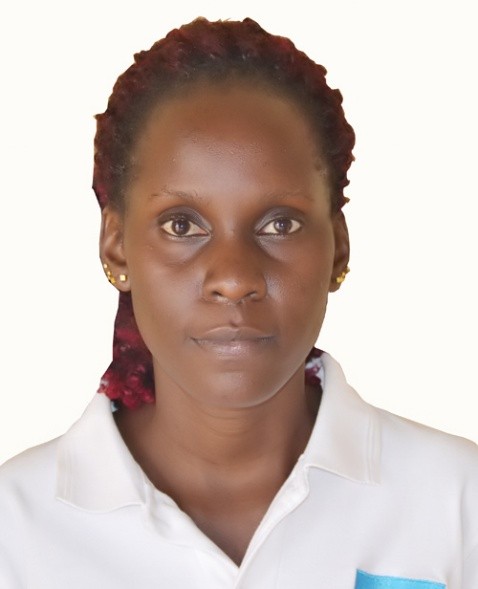
Daphine Amanya
- Groups:Busitema Fellows, Medical student
Daphine Amanya
Amanya Daphine is an ENRICH awardee from Busitema university. She is a Ugandan professional midwife and public health researcher with five years of experience spanning clinical care, health research, quality assurance, community engagement, and study coordination. She is passionate about generating evidence to inform maternal, newborn, and child health practice and policy. She currently serves as a Research Midwife and Site Lead for the Vital Heavy Menstrual Bleeding (VITAL-HMB) project at Busitema University in Mbale. In this role, she oversees participant screening and enrollment, data quality assurance, study reporting, and participant follow-up.
Throughout her career, Daphine has contributed to several high-impact maternal, newborn, and child health research initiatives, including the ITECH project, the BabyGel Trial, and research focusing on stillbirths, cytomegalovirus, and postpartum contraception. She holds a Bachelor of Science in Midwifery from Gulu University and a Master of Public Health from Busitema University.
Featured Research & Academic Studies
- Opioid Use Disorder (OUD) Screening in Sickle Cell Disease (SCD) Care:
Daphine led a critical cross-sectional mixed-methods study investigating Opioid Use Disorder among adolescents and young adults with Sickle Cell Disease at Mbale Regional Referral Hospital (MRRH) in Eastern Uganda. The study addressed an emerging public health concern by evaluating OUD prevalence along with the systemic facilitators and barriers to routine screening.
- Key Findings & Systemic Insights:
The study identified a high prevalence of OUD (73.0%) among the studied population, with 16.3% exhibiting severe OUD. Her research highlighted that health workers predominantly rely on clinical judgment rather than standardized tools due to operational barriers such as inadequate training, staffing shortages, limited privacy, and a lack of formalized referral structures.
- Methodological Expertise:
Daphine is highly skilled in mixed-methods methodologies. Her research toolkit includes conducting standardized clinical assessments (MINI / MINI-Kid), quantitative Poisson regression modeling, key informant interviews, focus group discussions, transcription, translation, and qualitative thematic analysis.