
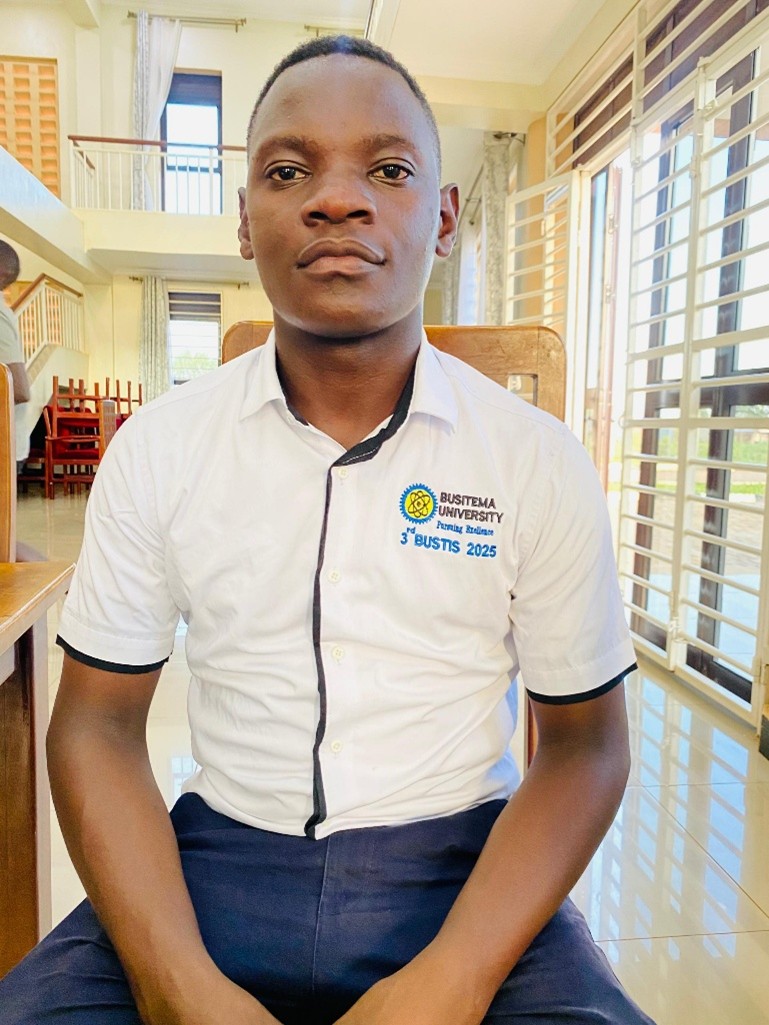
Ronald Tweheyo
- Groups:Busitema Fellows, Medical student
Ronald Tweheyo
Dr. Ronald Tweheyo is an Enrich awardee, a medical doctor, researcher, and advocate for health equity affiliated with Busitema University, Uganda. He completed his MBChB degree at the Busitema University Faculty of Health Sciences (2021–2026), where he established a strong track record of leadership and academic distinction. During his training, Dr. Tweheyo served as President of the Busitema University Research and Innovation Association, Research Secretary of the Medical Students’ Association, and President of the Antimicrobial Resistance and Stewardship Club. He is also a non-degree fellow under the NIH-funded ENRICH Uganda program and completed training on social determinants of health and health equity through the University of Minnesota.
Currently, Dr. Tweheyo serves as a Research Assistant for the VITAL Heavy Menstrual Bleeding (VITAL-HMB) project as well as the Natural Products and Research Centre at Busitema University. Recognized for his dedication to justice and healthcare access for vulnerable populations, his work spans qualitative and quantitative methodologies, health promotion, mentorship, and community-based participatory research. His contributions have been recognized through several accolades, including the Young Scientists Award (2025), the Best AMR Music Campaign Award, and being named the Best Research Student in the 2026 Medicine Cohort.
Featured Research & Academic Studies
- Catastrophic Health Expenditures in Sickle Cell Disease (SCD):
Dr. Tweheyo led a mixed-methods study examining the economic burden and coping strategies of caregivers during SCD-related hospitalizations of children aged 0–12 at Mbale Regional Referral Hospital in Eastern Uganda.
- Economic Impact & Coping Mechanisms:
The study evaluated direct and indirect costs to determine the prevalence of catastrophic health expenditure defined as healthcare spending exceeding 10% of total household expenditure during a child’s hospitalization while documenting the lived experiences and financial coping mechanisms used by affected families.
- Methodological Approach:
The study combined a quantitative cross-sectional survey of 120 mothers using interviewer-administered questionnaires with qualitative in-depth interviews of 21 caregivers to reach data saturation and capture nuanced experiences